The Challenge of Global Transformation

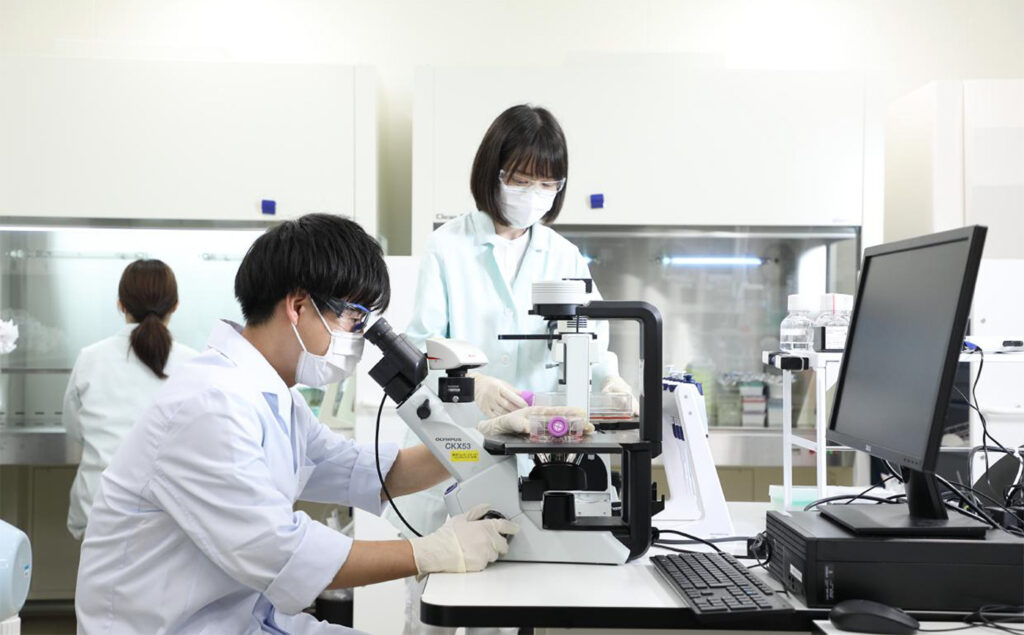
JCR Pharma, which celebrated its 50th anniversary in 2025, is a pharmaceutical company headquartered in Ashiya City, Hyogo Prefecture.
With its strength in the development of biopharmaceuticals, JCR Pharma is working together with patients around the world suffering from rare diseases to combat their illnesses.
The company has pursued the challenge of creating value as an R&D-oriented drug manufacturer with a global presence. This is the story of JCR Pharma transforming itself into an organization capable of competing globally.
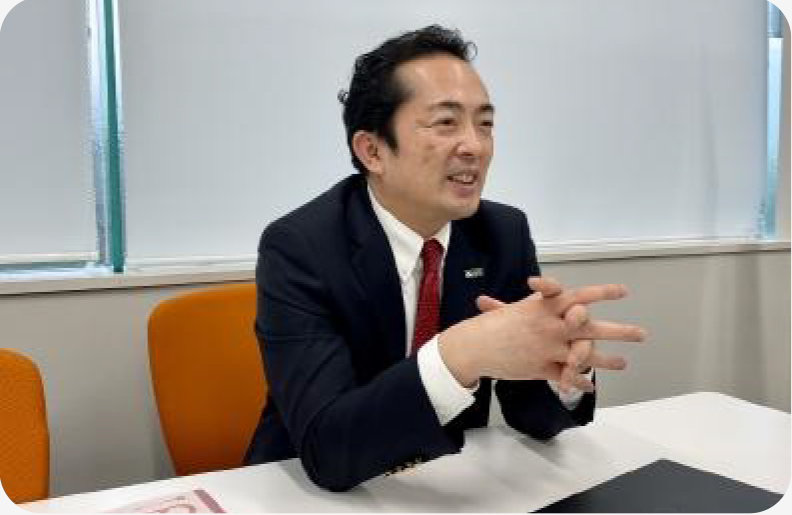
Mr. Kawata joined JCR Pharma in 2000 as a researcher. He served in the clinical development division for many years, involved in planning operations for JCR Pharma’s development pipeline since the 2000s. Since 2018, he has been developing management policies and strengthening the organization’s global business readiness.
How did JCR Pharma’s global transformation begin?
When I joined JCR Pharma in 2000, it was a company of about 100 to 120 people. At the time, we only had two products — urinary-derived products from our founding days and growth hormone-related products. In the 1990s, risks associated with biologically-derived components became a concern, so we shifted toward biopharmaceuticals. The entire 2000s were spent developing our first biopharmaceutical, erythropoietin. Looking back, I don’t think we had a clear global vision at the time. However, it was becoming increasingly difficult for pharmaceutical companies to grow significantly operating only in Japan, where the birthrate was declining, the population aging, and drug prices were being cut rapidly under the National Health Insurance drug price system. It is common for a pharmaceutical company to take more than ten years to develop a single product.
Ten to twenty years may seem like a long time from the perspective of a typical company, but that is the business cycle of biopharma product development. We are accustomed to planning and investing long into the future. In 2009, we partnered with a British pharmaceutical company. JCR Pharma’s globalization has rapidly accelerated since then.
We are focusing on developing human resources who can communicate on a global scale, not just in terms of speaking English, but also from the perspective of presentation skills and leadership.
How are you developing “global human resources” to cope with this trend?
Training human resources is one of our major challenges. Obviously we need to be able to do business in English. Beyond that, we are focusing on developing human resources who can communicate on a global scale, not just in terms of speaking English, but also from the perspective of presentation skills and leadership.
I said, ‘English proficiency is a must,’ and I am one of the people studying English. I started at NEI in 2017. Studying is tough when you are over forty… But just like brushing your teeth or eating, it is important to make studying English a part of your life, and as you do it, it becomes a habit, and it doesn’t feel like an effort anymore. And eventually you find yourself speaking it and understanding what you hear.
What I personally like about NEI is the ease of participation. There is no need to go to school because the lessons are online, they last 30 minutes and they are directly related to my own work and interests so it doesn’t feel like ‘studying’. The company pays 100% of the costs and HR training personnel check the progress.
Please tell us about JCR Pharma’s future prospects.
JCR Pharma is currently in the midst of a transition to full-fledged globalization in order to deliver its own products developed for rare diseases to patients around the world. Although we have more than 800 employees, most of them are Japanese, and the reality of our organization is that our business is based on the Japanese style, but now a global perspective has been added to it.
My position includes interviews with foreign institutional investors. When I first started NEI training, I did not have confidence communicating in English, so I had to use an interpreter at first, but I found myself able to speak without an interpreter at some point. Realizing your own progress is the greatest motivation.
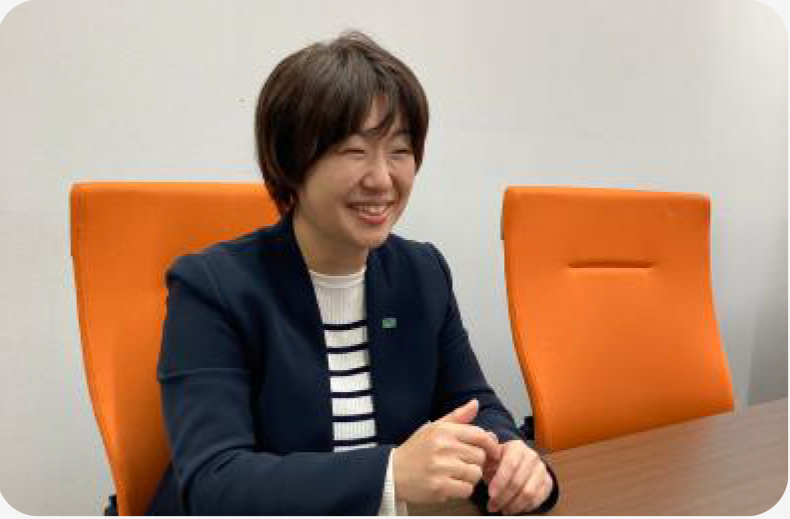
We met NEI, which provides English training to JCR Pharma, in 2017. Our chairman and president, Mr. Ashida, told us that with our size and capabilities, we could not conceive of expanding globally on our own. There are many elements to successfully partnering with a foreign company, one of which is effective and impactful communication. NEI was chosen to hone global communication skills.
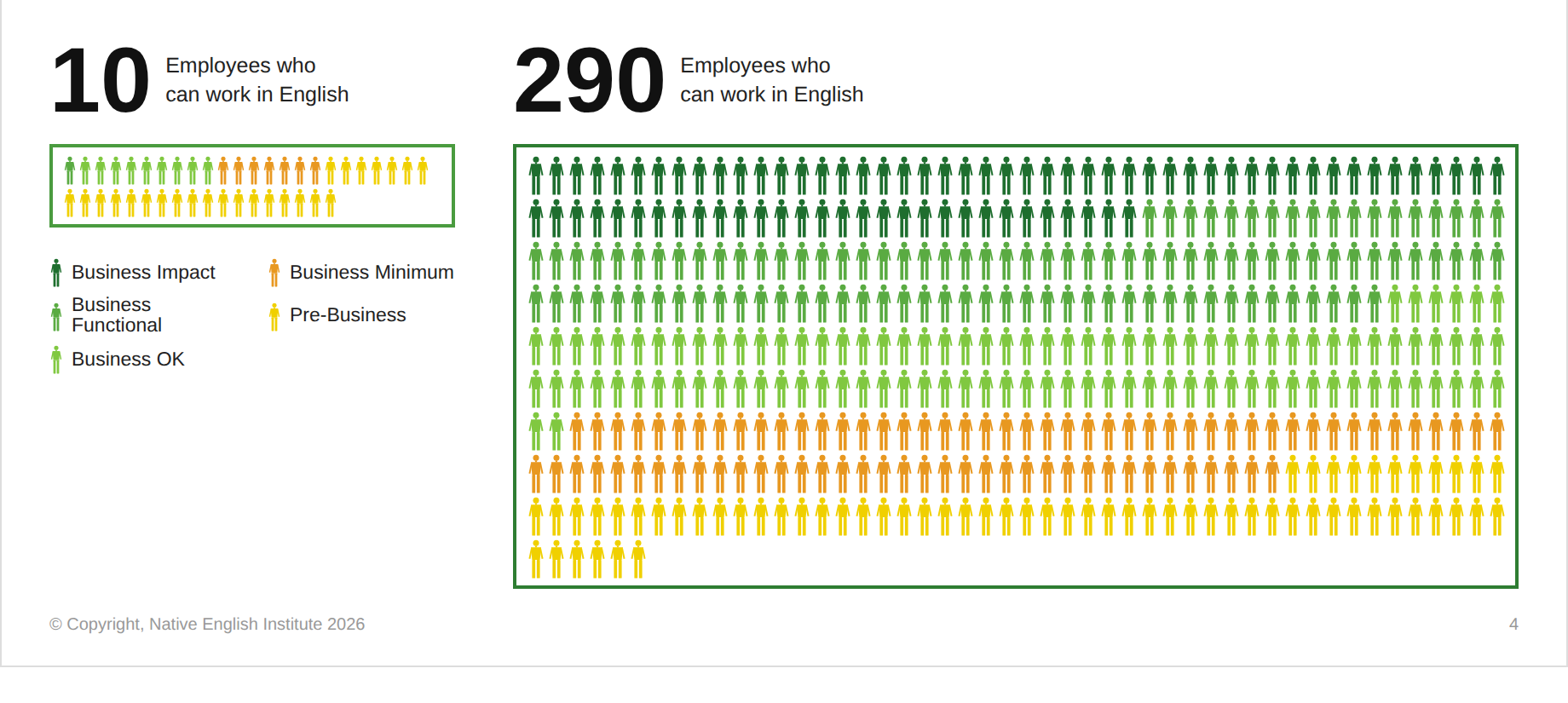
Employees who have gained confidence through training at NEI are actively speaking in English in presentations to overseas companies and in discussions, and employees themselves are highly motivated to learn English.
NEI Score targets are included in personnel evaluations under the ‘self-development’ category to visualize employees’ growth. This is also one of the shared indicators within the company.
In 2017, 52 JCR Pharma employees participated in NEI. As of April 2026, 438 JCR Pharma employees have participated.